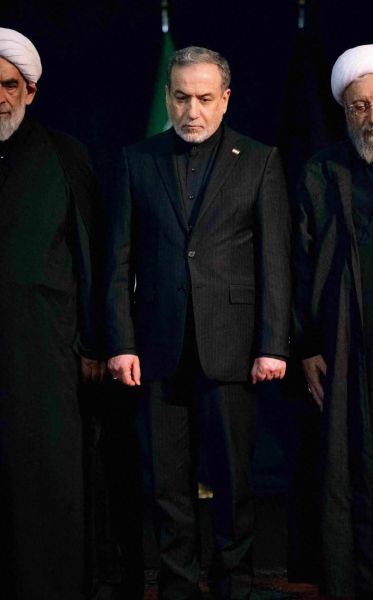
Abbas Araghchi and Iran’s High-Stakes Geopolitical Tightrope
Iranian Foreign Minister Abbas Araghchi has encountered the “most humiliating moment” of his political career. During the funeral of the late Supreme Leader Ali Khamenei, hardline supporters chased him into an alleyway, hurled insults calling him a traitor, and pelted him with stones.
In a recently released interview, Araghchi chose to publicly confront the “source of this malice.” He stated that since the outbreak of the war, he had been “fighting with a sword drawn” in the international arena to articulate Iran’s position, yet he received no fair coverage from the Islamic Republic of Iran Broadcasting (IRIB), and instead faced repeated smearing.
IRIB is Iran’s most influential state media outlet and has long been a bastion for hardliners opposed to any engagement with the United States. Following the signing of the U.S.-Iran ceasefire agreement, IRIB repeatedly suppressed voices from the country’s leadership advocating for the advancement of negotiations.
Amid mutual accusations between IRIB and the Iranian government of “undermining unity,” the U.S. and Iran paused their tit-for-tat strikes during the final weekend of July, raising the possibility of restarting talks. The Trump administration claimed it wanted to “give some space” to negotiations, while some U.S. media outlets reported that the pause occurred because the bombings over the past two weeks had “done all they could do.”
Caught Between a Rock and a Hard Place
After the outbreak of the U.S.-Israeli-Iranian war, Araghchi narrowly escaped death several times. In late February, when U.S. and Israeli airstrikes hit the office of Iran’s Supreme Leader, Araghchi was just a few steps away, reporting to Khamenei’s deputy, Mohammad Kazem Hejazi. Under the shock of the explosion, the walls and ceiling collapsed entirely, burying Araghchi and Hejazi in the rubble. Hejazi’s secretary was killed on the spot.
Having cheated death, Araghchi accompanied Iran’s chief negotiator and Islamic Consultative Assembly Speaker Mohammad Bagher Ghalibaf to Islamabad in April for U.S.-Iran talks. In 2013, after the government led by then-President Hassan Rouhani intensified nuclear negotiations, Araghchi participated in multilateral talks for the Joint Comprehensive Plan of Action (JCPOA) as Deputy Foreign Minister and chief negotiator, directly handling U.S. and European sanctions mechanisms, uranium enrichment limits, and international verification procedures. Subsequently, he navigated the U.S. withdrawal from the nuclear deal, the reimposition of sanctions, subsequent negotiations with Europe, and indirect talks during the Biden administration.
Western diplomats familiar with Araghchi describe him as an elusive opponent. Negotiating with him is like bargaining in a bazaar (the Persian word for market), and his patience can sometimes profoundly exasperate his counterparts. In the eyes of U.S. negotiator Wendy Sherman, Araghchi was personable in private, sharing photos of his grandchildren, but if one did not stay completely on guard at the negotiating table, he would “twist you around his little finger.” When the 2015 nuclear deal negotiations reached their climax, he threw a supposedly resolved issue back onto the table, dragging out the talks and moving Sherman to tears.
Spanish diplomat Enrique Mora recalled that Araghchi was fluent in English and knowledgeable, allowing the two to converse about anything from quantum physics to religion, yet the moment they returned to the negotiating table, he became “merciless.”
On the return flight from the Islamabad talks, the charter plane carrying Araghchi and his delegation faced security threats from Israeli fighter jets and was forced to make an emergency landing. According to Reuters, with the strong backing of mediator Pakistan, the United States pressured Israel, ultimately resulting in Araghchi and Ghalibaf being removed from the assassination list. U.S. pressure on Israel demonstrated that although the two countries’ war goals were initially very close, they quickly developed fundamental divergences. Danny Citrinowicz, a senior researcher at the Institute for National Security Studies (INSS) and former head of the Iran branch at the Israel Defense Intelligence Research and Analysis Department (RAD), told China News Service that once it became clear the Iranian regime would not be overthrown, “Trump and Netanyahu’s goals were no longer aligned.”
Following the Islamabad talks, internal divisions within Iran regarding negotiations also gradually came to light. Delegation member Mahmoud Nabavian, first deputy chairman of the Iranian parliament’s National Security and Foreign Policy Committee, emerged as a principal critic of the diplomatic track. He made shocking remarks on an IRIB program, claiming that the instructions of Supreme Leader Mojtaba had not been carried out by Araghchi and others. He also publicly leaked a classified letter allegedly from Mojtaba, demanding that the negotiating team terminate subsequent talks. At that time, it was late June, and the U.S. and Iran had already signed a memorandum of understanding.
Although the negotiating team refuted Nabavian’s claims, and IRIB stated it would investigate Nabavian’s “illegal remarks,” the incident still fueled the momentum of the anti-negotiation faction. Following the U.S.-Iran ceasefire in April, hardline supporters continuously took to the streets, denouncing Pezeshkian’s government and even directly issuing death threats against Araghchi and others.
In his recent interview firing shots at IRIB, Araghchi responded that the ceasefire was a collective decision, not an individual initiative by himself or Pezeshkian. Ending the war while holding the advantage was meant to lock in existing achievements at the minimal cost and enter negotiations under the most favorable conditions possible; continuing to fight meant risking the destiny of the nation and its people.
Araghchi also warned in the interview that the security vulnerabilities that allowed the attacks on Khamenei and other high-ranking officials still existed. The activities of foreign intelligence agencies within Iran might go beyond gathering intelligence, attempting to influence national decision-making processes and manipulate Iran’s public opinion environment. Alex Vatanka, a senior fellow at the Middle East Institute in Washington, believes this statement served as an implicit criticism of the pro-war hawks within the regime.
The Ups and Downs of a Career
As a long-term participant in nuclear diplomacy, the ups and downs of Araghchi’s career mirror the fate of U.S.-Iran negotiations.
After reformist President Hassan Rouhani took office in 2013, then-Foreign Minister Mohammad Javad Zarif took over the leadership of the nuclear negotiations from the Supreme National Security Council and kept Araghchi on the negotiating team. The decision to retain Araghchi was initially met with skepticism. Previously, Araghchi had served as the negotiating deputy to Saeed Jalili, the Secretary of the Supreme National Security Council. Jalili represented the hardline faction, and his rigid negotiating style deepened Iran’s isolation.
For Zarif, Araghchi was both a seasoned negotiator familiar with nuclear issues and a political buffer between the team and the hardliners. Zarif had studied in the U.S. during his youth, and his “American background” and “Americanized diplomatic style” were unpopular in parliament. Araghchi, on the other hand, was a veteran of the Iran-Iraq War with deep “revolutionary credentials,” maintaining good relations with the powerful Islamic Revolutionary Guard Corps (IRGC) while navigating comfortably within moderate circles.
In the view of Ellie Geranmayeh, a senior policy fellow at the European Council on Foreign Relations, Araghchi carried the prudence of a typical technocrat, skilled at maintaining balance amid factional struggles. Zarif had more political edge, spoke bluntly, and was more willing to test the regime’s bottom line. This complementary duo led to the birth of the JCPOA two years later. In exchange for freezing its nuclear program and allowing inspectors into nuclear facilities, Iran secured the easing of sanctions and the unfreezing of certain assets. However, the main framework of the agreement lasted only until 2017; after Trump entered the White House, the U.S. reinstated sanctions.
After the U.S. withdrew from the nuclear deal, Araghchi continued negotiating with the remaining signatories in an attempt to preserve the framework. However, negotiations were fraught with difficulty, and Khamenei harbored doubts about restarting the deal. By the time the Vienna talks reached a critical concluding phase in 2021, the political winds in Iran had turned extremely unfavorable for Zarif, Araghchi, and their allies.
“In the end, people will always think we didn’t handle it well enough, and we will become the scapegoats,” Zarif told Araghchi in 2013 while still hesitating to accept the post of foreign minister. His words proved prophetic; after Ebrahim Raisi came to power, Zarif was replaced by Amir-Abdollahian, who had closer ties to the IRGC and specialized in Arab affairs. Araghchi was recruited by an intimate of Khamenei and served as secretary of the Strategic Council on Foreign Relations—a body providing policy advice to the Supreme Leader. Many viewed this arrangement as being “kept without being used,” as the position held no actual influence.
Following the deaths of Raisi and Amir-Abdollahian in a helicopter crash, Iran held snap presidential elections. New President Masoud Pezeshkian promised during his campaign to resolve Iran’s dispute with the International Atomic Energy Agency (IAEA) and engage with the West. Araghchi returned to the Ministry of Foreign Affairs in the summer of 2024 to serve as Foreign Minister. This appointment was seen as a signal that Iran wished to accelerate negotiations, prepare bold steps to lift sanctions, and prevent the spillover of the Gaza conflict.
Araghchi adopted a pragmatic stance on U.S.-Iran relations. He once stated that as long as Iran adhered to its revolutionary path, fundamental problems with the U.S. could not be resolved, but differences could be managed. Until the eve of the all-out war in late February of this year, he was still striving to avoid conflict and achieve a more favorable nuclear deal through negotiation and engagement.
However, Trump’s demand that Iran suspend uranium enrichment proved unacceptable to Tehran. “For Iran, the right to uranium enrichment is inextricably linked to sovereignty, deterrence, and national self-esteem. Iran is the only signatory to the Nuclear Non-Proliferation Treaty asked to suspend uranium enrichment, which makes Tehran feel deeply humiliated,” pointed out former Iranian diplomat Seyed Hossein Mousavian.
In the recent interview, when asked whether the war could have been averted had they accepted Trump’s demands at the time, Araghchi explicitly replied: “If we had accepted, we would have suffered losses far greater than war.” He also quoted Khamenei: “When the cost of not fighting is higher than the cost of fighting, one must fight and not hesitate.”
In his 2024 book, The Power of Negotiation, Araghchi wrote that a negotiator’s confidence depends on domestic cohesion and national military strength. If one cannot form a balance of power with an opponent, it is better to postpone talks and dialogue only after a parity of force is established. Iran adopted this approach after its nuclear facilities were bombed in June of last year and during this year’s “40-Day War.”
Araghchi also wrote in the book that negotiation is a process of “selling snow in the sun”; overusing leverage will only lead to losses. Truly brilliant diplomacy requires leaving an opponent a graceful exit.
Nevertheless, on July 29 local time, the United States launched another airstrike against Iran, bringing an end to the brief five-day ceasefire.