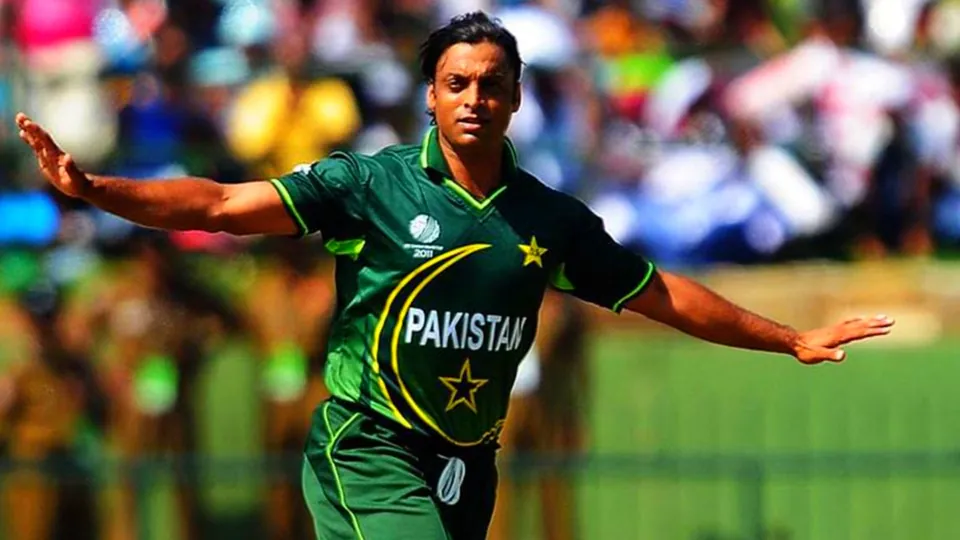
Shoaib Akhtar, once a public critic of the Pakistan Cricket Board, is now expected to play a major role in Pakistan cricket as it prepares for another top-level shake-up following talks with Mohsin Naqvi.
Shoaib Akhtar has always been outspoken, pulling no punches when pointing out the shortcomings of the Pakistan Cricket Board (PCB). From player selection and administrative decisions to the national team’s strategic direction, the former fast bowler has frequently used his public platform to challenge those making decisions for Pakistan cricket. Now, however, he may find himself the subject of such scrutiny. According to the Press Trust of India (PTI), following Pakistan’s crushing defeat against England, PCB Chairman Mohsin Naqvi is considering an overhaul of the board’s cricketing structure, and Akhtar is tipped to take on a key role within the PCB. While the specific details of the position have not yet been officially announced, it is understood that discussions have already taken place between Akhtar and Naqvi.
Reportedly, Islamabad-based Akhtar met with Naqvi last week for in-depth talks regarding the state of Pakistan cricket and the PCB’s future direction for the national team. A source close to the PCB indicated that the relationship between the two has improved significantly in recent months, particularly after Naqvi reached out to Akhtar following the passing of Akhtar’s brother.
The source stated, “When Shoaib’s brother passed away a few weeks ago, Mohsin Naqvi was in close contact with him and offered his support. Shoaib was deeply impressed by this gesture, especially given his history of publicly criticizing the PCB and Pakistan cricket in the media.” Subsequently, their relationship appears to have evolved into broader discussions about the sport. Naqvi reportedly shared his vision for Pakistan cricket with Akhtar and invited him to visit the National Cricket Academy and the team’s training camp.
However, these discussions appear to have moved beyond mere pleasantries or informal consultation. It is understood that Akhtar has put forward his own ideas on how to rebuild Pakistan cricket, along with the conditions under which he would be willing to assume significant responsibility. “Shoaib is in line for a key position, but it appears that when he met with the chairman, he put forward his own ideas and conditions—measures he believes will drive Pakistan cricket forward,” the source added.
Following the crushing defeat against England, the Pakistan Cricket Board plans to implement sweeping reforms.
Akhtar is in contention for a national team role at a time when Pakistan cricket is in turmoil. The men’s team suffered a crushing 0-3 series defeat in England—marking the first time Pakistan had ever been swept in a series on British soil—which has intensified scrutiny of the players and the team’s organizational structure. Consequently, the Pakistan Cricket Board (PCB) is considering an overhaul of its entire cricketing brain trust, extending beyond just the men’s team. Furthermore, the Board is evaluating candidates for coaching and advisory roles following the departures of fielding coach Shane McDermott and bowling coach Ashley Noffke.
The PCB plans to appoint a permanent, long-term head coach for the Pakistan women’s team, driven by concerns over the national team’s performance across all levels. “The Board is formulating future plans, and adjustments to the cricketing brain trust are imminent, as the Chairman has made it clear that he expects better results from the national men’s, women’s, youth, and junior teams,” sources said.
For Akhtar, any official appointment would mark a significant shift. For years, he has analyzed Pakistan cricket from the outside, frequently calling for stricter selection criteria, greater accountability, and a more ambitious cricketing culture. The PCB may now be preparing to give one of its most outspoken critics the opportunity to influence these decisions from within.