About 17 years ago, Steve Jobs stood on stage at a conference center in San Francisco and announced that he would be introducing three products: an iPod, a mobile phone, and a web browser.
“These are not three separate devices,” he said. “This is one device, and we call it the iPhone.”
The first-generation iPhone cost $500—a relatively high price—but I was eager to ditch my mediocre Motorola flip phone and felt like splurging. It had its flaws, including slow cellular speeds, yet it lived up to the hype.
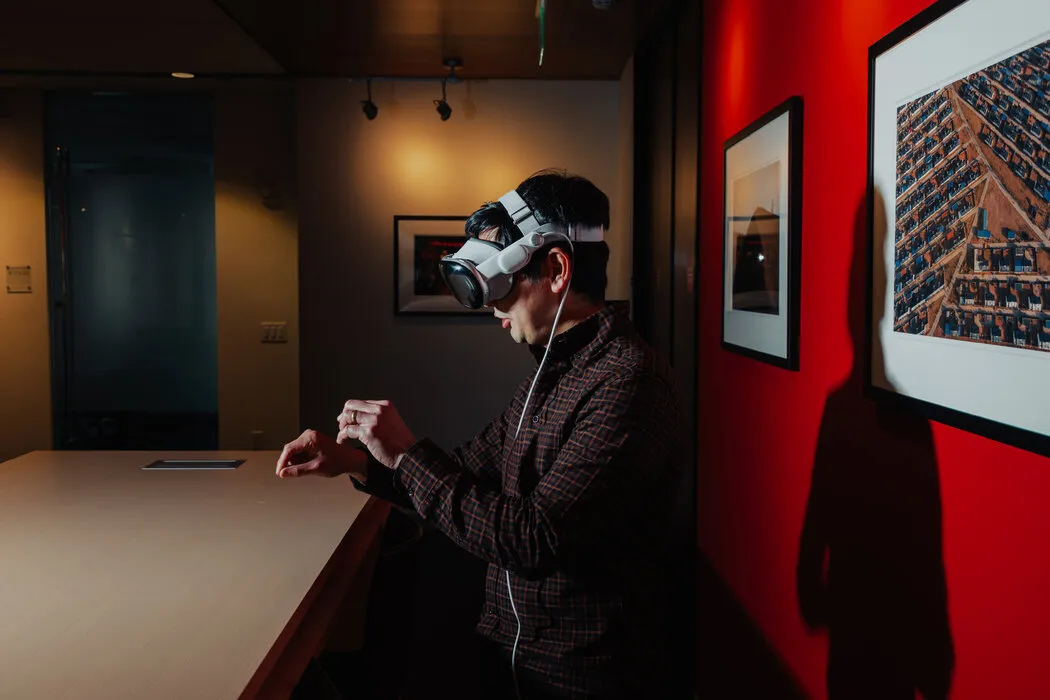
Over the past week, I’ve had a vastly different experience with Apple’s latest “first-generation” product: the Vision Pro, a virtual reality headset that resembles a pair of ski goggles. Launched last Friday, this $3,500 wearable computer is equipped with cameras that allow you to see the outside world while using apps or watching videos.
Apple calls it a “spatial computing device” that blends the physical and digital worlds, allowing people to work, watch movies, and play games.
Apple declined to provide an early review unit to The New York Times, so I bought a Vision Pro myself last Friday. (When adding accessories many people would want—including a $200 carrying case, $180 AirPods, and $100 optical inserts—the total price far exceeds $3,500.) After using it for about five days, I am unconvinced that people will derive much value from it.
Compared to other first-generation Apple products I’ve used, this device feels unrefined. It is no better suited for work than a computer, and the games I’ve tried so far aren’t fun, making it hard to recommend. One key feature—video calling using a digital avatar modeled after the wearer—terrified children during family FaceTime calls.
The headset delivers brilliantly on one promise: playing video—including high-definition movies and your own 3D recordings—immerses you in past memories in a way that is both eerie and cool.
Over the past decade, companies like Meta, HTC, and Sony have struggled to sell headsets to mainstream consumers because their products were cumbersome to wear, lacked apps, and didn’t look cool.
Compared to other headsets, the Vision Pro boasts a superior user interface, better image quality, more apps, and greater computing power. However, it is slightly heavier than the cheaper Meta Quest headset and offers only two hours of battery life when connected to its external battery pack.
Compared to the bulky plastic headsets of the past, Apple’s goggles are sleek and stylish. However, videos of early adopters—whom I call “Vision enthusiasts”—walking outdoors wearing the device demonstrate that people still look comical wearing high-tech eyewear, even when designed by Apple.
A Better Interface
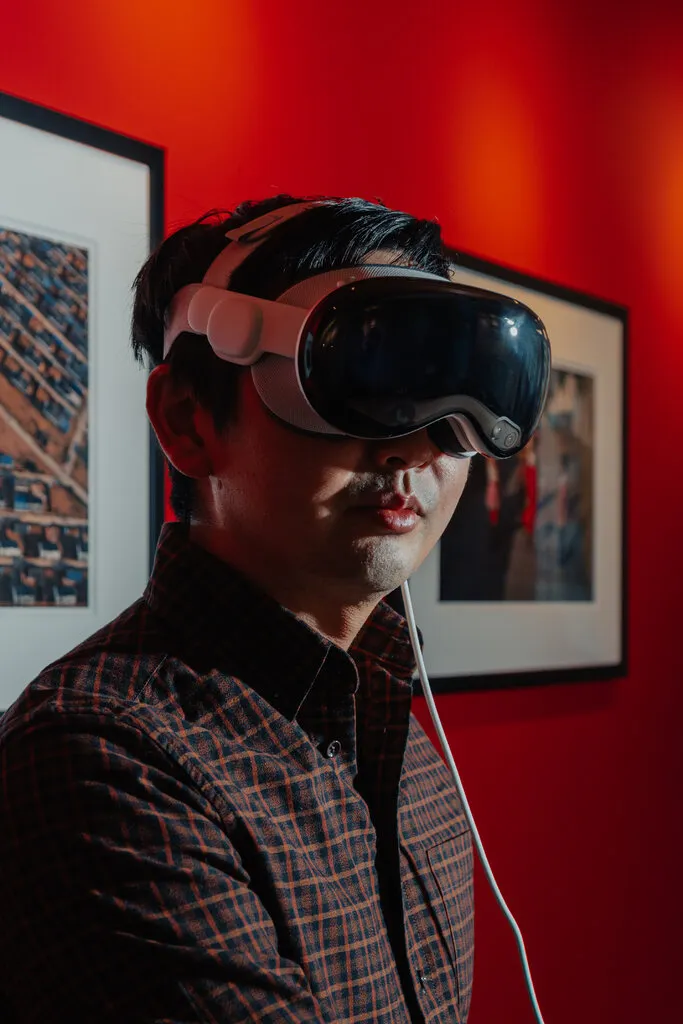
Compared to other headsets I’ve tested, the Vision Pro is far ahead in making immersive 3D interfaces simple, allowing users to control them easily with their eyes and hands. I had four colleagues try the device at the office, and all of them learned how to use it within seconds.
This is because the interface feels familiar to anyone who owns an iPhone or similar smartphone. You see a grid of app icons; looking at an app is like hovering a mouse cursor over it, and to select one, you simply tap your thumb and index finger together in a quick pinch gesture. This pinch gesture can also be used to move and resize windows.
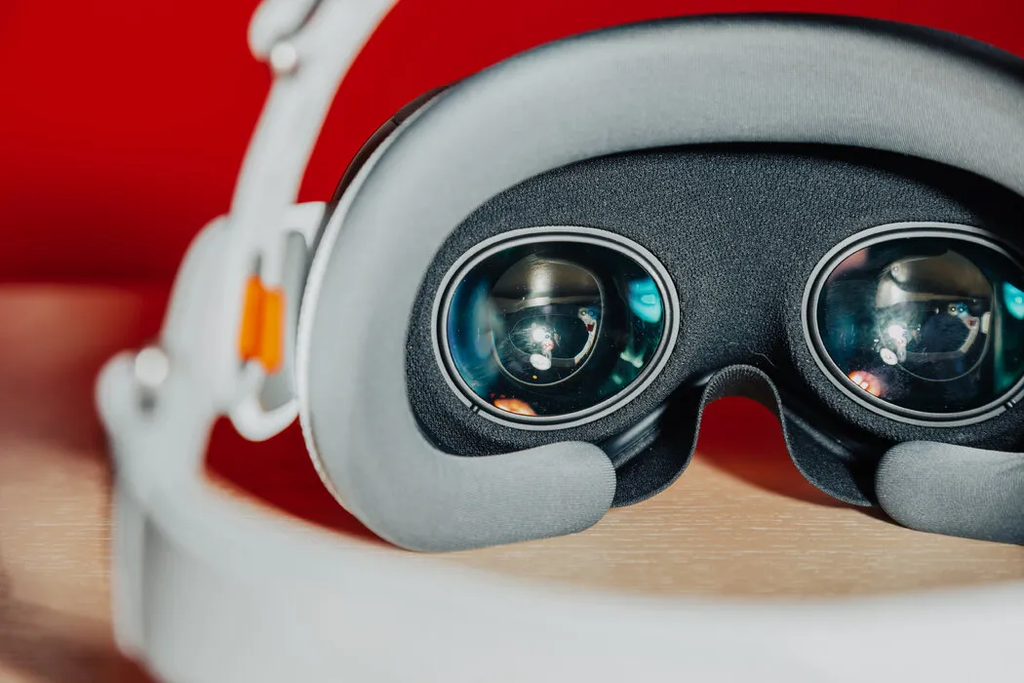
The Vision Pro features a dial known as the “Digital Crown.” Rotating it counter-clockwise allows you to see the real world in the background while keeping digital app windows in the foreground; rotating it clockwise hides the real world behind an opaque backdrop.
Most of the time, I prefer seeing the real world, yet I still feel isolated. The headset cuts off part of your peripheral vision, creating a binocular-like effect. I admit that sometimes this makes it hard to remember to walk my dogs, as I can neither see them nor hear their whimpering. I even tripped over a stool once. An Apple spokesperson pointed to the Vision Pro’s safety guidelines, which advise users to clear obstacles from their surroundings.
Getting Work Done
When working with the headset, you can arrange multiple floating apps around you—for instance, placing a spreadsheet in the center, a note-taking app to the right, and a web browser to the left. It’s essentially a 3D version of switching windows on a computer screen. While the concept is intriguing, interacting with floating screens by pinching your fingers doesn’t actually boost productivity, as you have to constantly turn your head to view them.
I could only tolerate switching between the notes app, the browser, and Microsoft Word for about 15 minutes before feeling nauseous.
The most unpleasant aspect of the Vision Pro is typing on the floating keyboard, which requires you to poke at individual keys. I had intended to write this review using the headset but realized I wouldn’t meet my deadline if I did.
There is an option to connect a physical keyboard, but in that scenario, I’d rather just use a laptop that doesn’t add weight to my face.
The Vision Pro also works with Macs; you can mirror your computer screen into the headset as a virtual window and expand it into a large display. During my testing, there was persistent lag—keystrokes took a fraction of a second to register, and the mouse cursor moved sluggishly. I also found myself instinctively trying to control the Mac using the “pinch” gesture—even though that’s not how it works—which was frustrating.
Next, I tried using the headset in the kitchen to download a pizza recipe while gathering and weighing ingredients. Moving around and viewing the world through the cameras made me feel nauseous again, forcing me to take it off. The Vision Pro is most comfortable when used while seated. Apple recommends taking breaks to minimize dizziness.
Video calls are now a staple of office life, and in this regard, the Vision Pro performs notably worse than a laptop with a built-in camera. The headset uses cameras to capture your face and stitches the images into a 3D avatar called a “Persona”—a feature Apple labels as “beta” because it is still a work in progress. The “Persona” is so off-putting that people feel awkward using it on work calls. The Vision Pro captured an unflattering image of me—my cheekbones were missing, and my ears looked blurry. During a FaceTime call with my in-laws, they remarked that the blurriness reminded them of studio portraits from the 1980s.
My three-year-old niece turned and walked away the moment she saw this virtual “Uncle Brian.” Another niece, seven years old, hid behind her father and whispered, “He looks fake.”
How is the entertainment experience?
Video is a highlight of the Vision Pro. When streaming movies via apps like Disney+ and Max, you can grab a corner of the video and drag it to expand the display into a massive, high-resolution TV; movies like Avengers: Endgame and Avatar: The Way of Water can be watched in 3D. The image quality appears brighter and sharper than that of Meta’s Quest headsets. The audio quality is excellent, though the speakers are loud enough that you’d need AirPods to use the device in public.
The headset’s two-hour battery life isn’t long enough to finish most feature-length films, but in my experience, that doesn’t matter; I rarely watch for more than 20 or 30 minutes before needing to take off the heavy device to give my neck and eyes a rest.
(Note: There are no native Netflix or YouTube apps for the Vision Pro, though you can stream content via their websites.)
I prefer watching movies on a flat-screen TV so I can share the experience with others, but the headset serves as a useful personal TV in certain situations—such as in a small apartment, on an airplane, or when someone else is watching a show you aren’t interested in.
Videos shot with an iPhone 15 Pro or the Vision Pro’s own camera can be viewed in 3D on the headset—a feature known as “Spatial Video.” When I watched a video of my dog eating a treat at home, I could reach out and pretend to pet him. These videos look a bit rough around the edges, but they are enjoyable.
There aren’t many games available for this headset yet. I tried out some new Vision Pro titles, such as Blackbox, which involves moving through a 3D environment to pop bubbles and solve puzzles. It looks good, but my interest waned once the novelty wore off. Given that Meta’s Quest 2 ($250) and Quest 3 ($500) headsets boast much richer game libraries, it is hard to recommend the Vision Pro for virtual reality gaming.
When all is said and done
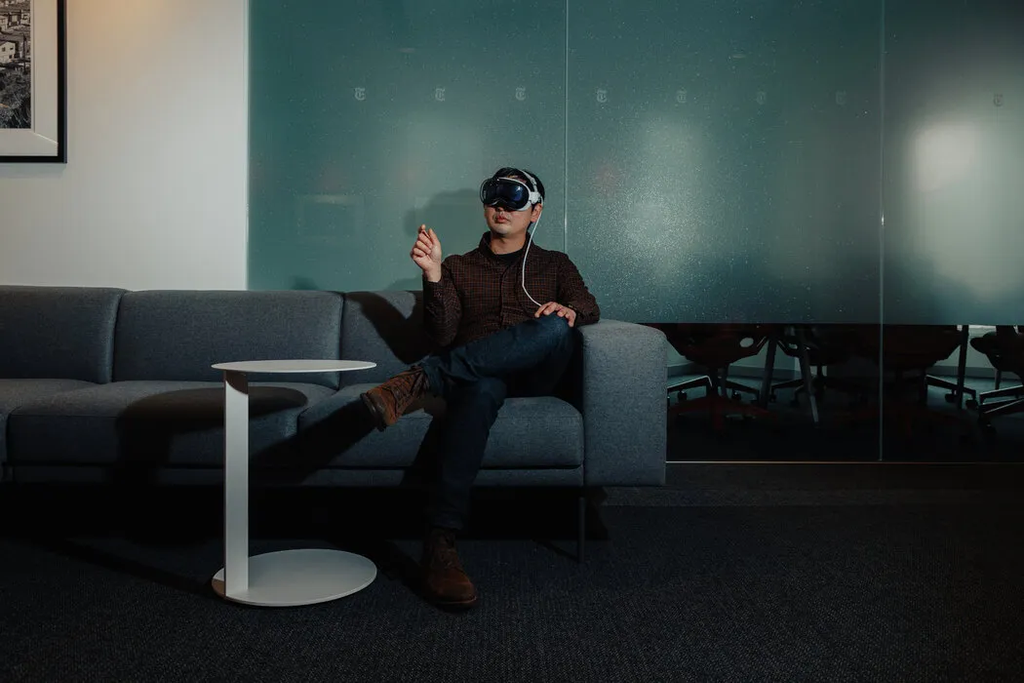
The Vision Pro represents a beginning of some sort—though I am not sure exactly what kind.
However, the point of a product review is to evaluate it as it stands right now. In its current state, the Vision Pro is an impressive yet incomplete first-generation product, with plenty of issues and necessary compromises. Beyond serving as a fancy personal TV, it lacks a clear sense of purpose.
What surprised me most about the Vision Pro is that, for such an expensive piece of electronics, sharing the headset with others is incredibly difficult. While it does feature a “Guest Mode,” it does not allow for the creation of individual profiles for different family members to load their own apps and videos.
Ultimately, this is a computer designed for solitary use—yet it arrives at a moment when, after years of isolation behind masks, we are seeking to reconnect with others. This may well be the Vision Pro’s biggest blind spot.